Showing posts with label dog training. Show all posts

Friday, April 17, 2015

Weekly Awards

Best Selfies

Warning: You may fall in love with all the adorable selfie pros.


BONUS

Group Selfie


Most improved Board and Train

Max 


Monday, June 23, 2014

Puppies at Work 4: The Finished Product

This post is the last in the Protection Work series, and we’ve covered all the basics from two month old puppies all the way to amateur protection dogs in-training. If you haven’t been following the series I recommend that you go back and read the first 3 articles HERE.
Now that you’re all caught up, it’s time for the fun part: watching people get bit.


Alline Globule, nicknamed Allie, was Dennis’s award-winning German Shepherd Dog. She was raised and trained in Germany, and is featured on several websites. The Trzcinski family bought her when she was several years old, and she quickly fit herself into their family. They described her as great with their kids and other dogs, cuddly, but always alert to any danger.  She raised multiple litters, with many of the puppies showing as much bitework potential as she had. Unfortunately, she became ill and passed away in early 2014, much to everyone's shock. We will always miss her, but she left behind a great legacy!

Those of us that worked at Pet U were lucky enough to catch Dennis training with Allie. It was incredible to see the amount of excitement she had for her work, along with her immediate response to Dennis’s commands. Her tail never stopped wagging, but she sounded truly vicious while she barked. Fully trained protection dogs like Allie are able to turn their work drive on and off in a split second. They are lovable, friendly, goofy and calm but if they sense a threat they wouldn't hesitate to give their life for their family.


While a protection dog's bite is important, more important than the attack aspect of training is the bond that is built and the obedience training that is done. The dog with the strongest, fiercest bite isn't worth a dime if their obedience work isn't up to par.


As with most working German Shepherd Dogs (GSDs), Allie was trained in German. She responded to 3 separate commands for heel: fuss (left heel), heel (in between the legs), and enohey (right heel, spelling is incorrect). She knew sitz (sit), platz (down), bleib (stay), hiere (come), aus (drop it) and more.


Upon Dennis’s command, Allie would sit and bark ferociously at an attacker, and then after a separate command, she would race and bite the attacker. After biting she only released her hold when Dennis told her to, even if the attacker fell down, and tried his hardest to throw her off. Protection dogs are trained to not release the attacker no matter what, until the release command is given by their trainer. The entire attack sequence is very carefully planned out, and designed to instill maximum fear.


Video: In the beginning Allie shows off her obedience training with heeling practice. Each time Dennis says fuss he is asking her to heel on his left side, and once he says 'heel' she is supposed to stay between his legs. At the end of the video Dennis releases her and gives her the bite command. The stick that the decoy uses is designed to make a lot of noise and movement, but it never actually touches Allie. Notice how her tail never stops wagging, and that she keeps up her energy and excitement the whole time!


Alline was the real deal; she was a lovable family pet, as well as a powerhouse protection dog, and we all miss her. Several of her puppies have shown great potential, and will be shown at this year's Service Dogs of America trials this July. Broc has been training since he was two months old, and will turn two years old this August. Pepper is 1 1/2 years old, and has been training for the last year. They were featured in the last post, focusing on their different stages in training.


If this type of training interests you at all, please stop out and visit us at the Service Dogs of America trials, held July 5, 2014 from 9am - 5pm.  The trials will take place just south of Milwaukee, at 3002 4 Mile Rd, Racine, WI 53404.

Wednesday, June 11, 2014

The Right Way to Use Treats

We love incorporating treats into our day here at Pet U. They are effective training incentives both with our training clients as well as with our daycare dogs. We can quickly and easily calm down a large group of dogs just by waving the hot dog container around, and our dogs brought here for training actually look forward to working with us! We've answered questions about this technique ranging from "But won't my dog get fat?" to, "Will he learn to only work for food?" and even, "I want my dog to work because he respects me, not because he wants a treat."

If you are using treats correctly, there is no risk of weight gain, and your beloved pup will respond to commands quickly and happily (both because he loves and respects you and because he might get a treat.) If you are concerned about the weight factor, we recommend feeding your dog a little bit less dry food to balance it out. Even us humans need incentives to work once in a while as well; the boss offered to throw an office party if everyone meets their monthly quota? I'm on it! It's the same deal for dogs - knowing that they might get a reward at any point for their good behavior keeps them going strong!

So now that you understand why we use treats, here are a couple of pointers for how to use them to your maximum benefit:

You know that training your dog is a continuous process, right? That it's not just the few minutes that you decide to actively train with your dog, but that it's happening all day every day? Every action that your dog does, or doesn't do, can be used as teachable moment. Therefore, every response that we give to our dog's actions is enforcing their behavior, right OR wrong.

Take a second and think about how, and when, you give your dog treats. I've been guilty more than once of giving my dog a bone to gnaw on, just to calm him down. From my dog's perspective, that's me saying "Good boy! Great job racing around the house and jumping on furniture when I've got friends over. I'm going to reward you for that wonderful behavior!" Not quite what I was going for.

So, rather than calling them 'treats', try referring to them as 'rewards' instead. Then, the next time you want to give your dog his 'reward' make sure that he has earned it. The problem with handing out treats any old time is that it decreases the value of the treats in your dog's mind. Why should he work for it if he knows you will just give them away for free later on? Here are some behaviors that would earn a reward, and make sure to only reward the behavior that you want to keep.

  1. Run your pup through several commands - sit, down, stay, shake, roll over, etc. The idea is to make him work for his reward.
  2. Practice having him take treats nicely - have him sit and offer out a treat. If he lunches or snaps for it, pull your hand back. Choose a command such as 'gentle' or 'wait', and try again. Only give him the treat when he waits nicely for you to give it to him.
  3. If you are talking with a friend, or have him out and about with you, reward him for sitting or laying quietly at your feet.
  4. Have him sit and stay before you open a door. Make sure YOU exit through the door, and he follows you.
  5. Use rewards to enforce being in a desired location, such as his bed or his crate. This can also be useful for keeping him off the couch, or teaching him to stay in one spot in the car instead of having free reign. For this, you will give all of his rewards only when he is in the desired location for a few days, until he is happily going there himself.
  6. Work on confidence building. Use treats to lure him into a kiddie pool, up the stairs, or through a small opening.

But remember, not every good action needs or deserves a food reward. Head pats, belly rubs, and toys are all great rewards as well! Intermingle the tasty treats in with lots of good, old-fashioned attention to keep his excitement level up; otherwise he might get full too quickly, or get tired of the treats.

Thursday, June 5, 2014

Pet U Summer Events

So you already know that Pet U is having it's 2nd birthday coming up in just a few weeks, on June 25th. We couldn't be more excited, and we have lots of festivities planned for the big day. We will be staffed to the nines, and are hoping that all of our favorite pups and their owners will join us for our big day! Just give us a call and let us know you'd like to add Wednesday June 25th to their schedule, and make some room in your own schedule for a slice of cake! :)
We'll be passing out doggie cake to all of the dogs during lunch, and will also be offering a bath special to give your pup the full birthday experience. Stay tuned for more details!

As for the rest of the summer, we have events almost every weekend until mid-July.


Sunday June 8th - Join us at St. Mark's Episcopal Church in South Milwaukee for Barks at St. Mark's Dog Blessing. Mass will be held outside starting at 9am. Any social, friendly and well-mannered dog who likes people and other dogs are welcome! After Mass there will be a free picnic, silent auction, and pet-friendly organizations available with information. We will have several staff members there as well with free goodie bags! Click HERE for more information.


Saturday June 21st - We will be running a booth at "An Affair for Animals", a Pet Expo put on by Lakeland Animal Shelter. It will be held at the Walworth County Fair Grounds at 411 East Court St. in Elkhorn. The expo runs from 10am - 4pm, and includes free parking and admission. There will be games, face painting and bouncy houses set up to entertain the little ones, as well as swimming pools and agility, lure and obstacle courses for the dog. Click HERE for more information.

Wednesday June 25h - Awesome, gigantic birthday bash held at Pet U.

Friday July 4th - We will have a float in the Oak Creek 4th of July parade! Exact time and meeting location are TBA, but it will be around 8:30am the morning of the 4th near the Oak Creek High School. We will have a truck and a trailer all decked out with Pet U decorations, and are looking for some awesome volunteers to walk with us and promote our business. We have a sign up sheet at the front desk, so stop in and sign up today!

Friday July 4th - Saturday July 5th - Pet U is excited and proud to host this year's Service Dogs of America trials. Due to space requirements the event will not be held at Pet U, instead drive on down to 3002 4 Mile Dr, Racine, WI 53404, just 20 minutes south of Milwaukee. There will be people coming from as far away as California, Texas and Florida to come to the trials, so make sure you don't miss out either! Click here to visit the Service Dogs of America website, and watch the video below to see a small part of the day's events. (If you look closely, you can see Dennis as a judge in the background!)

If you are new to the world of protection and police dog training (as most of us are!) this video can look a bit scary. You can tell just by seeing the dog's tail wag how much they enjoy their work! Click HERE to learn how these incredible dogs are trained, and then come out to join us at the SDA Trials!


Feel free to call us at 414-766-1100 if you have any questions about the events listed, and make sure to stay tuned for upcoming events later in the summer.

Wednesday, April 30, 2014

Canine Body Language 101: Approaching a Nervous Dog

So far in this series we’ve focused on dog body language with the intention of us better reading our dog’s body language. However, allowing a dog to read OUR body signals is just as important. We stress this strongly to our new employees at Pet U - learn to read a dog’s body language so that you can respond appropriately and gain the dog’s trust. If a dog is cowering in the corner, would you treat him the same as a relaxed, happy pup running around the play group? No, not at all.
This concept can be as simple as comparing it to meeting a child for the first time. What is the first thing you do? Crouch down and get on their level, right? We want to make ourselves seem non threatening and friendly, so we make ourselves as small as possible. Then, we let the child approach us first. Some kids are more nervous than others, and hide their face in their parents legs. Others are more outgoing and will immediately warm up to a friendly stranger.
Dogs are no different. Some will come bounding toward you and shower you with kisses. Others will hide behind their owner’s legs, and others will snap and bark aggressively at strangers.

Here is a rule of thumb for meeting a new dog: If he is making an effort to look either small and harmless (tail tucked, ears pulled back, looking away from you) or big and mean (ears pricked forward, tail straight up, hair raised along back), ignore him. Not all dogs should be approached, especially if they don’t make a move to approach you first.


Our natural instinct is to approach a dog head on, staring down at him, and lowering a hand to pat his head. However, all of this portrays dominant body language in the canine world, and can make a dog feel immediately threatened - dogs who are already anxious will pull farther away, and dogs who have aggressive tendencies might snap unexpectedly.

Take your cue from the owner - wait until he gives you the go-ahead, and then display this body language instead:

  1. stop a few feet away
  2. crouch down
  3. turn your body perpendicular to the dog
  4. don’t make eye contact
  5. leave your hand down by your side, don't reach out to him


This brings you down to his level, and allows him to check you out as he feels comfortable. Let the dog approach you and sniff at his own pace. If he stays away and maintains his nervous body language, don’t push it. If he does come up to you, check that his posture is relaxed, and wait for him to ask for your attention.

For more tips on reading a dog's body language, visit THIS post on body posture.


Wednesday, April 23, 2014

Summer Training Classes

Summer is just around the corner, and wouldn't you love to bring your dog to the park with you and know that he'll behave? By signing up for our next set of training classes, you can! Our next session will be starting up in a few weeks, May 3rd to be exact. We have 5 different classes available, ranging from our puppy AKC Star class to our Doctorate's class, which is a preparation class for competitions.

Classes run for 1 hour every Saturday from May 3rd to June 7th, and are a wonderful way to get your dog some well-needed socialization time. Our classes are small, with never more than 10 dog/handler teams. This lets our trainers give each of you that necessary one-on-one attention, while keeping it a fun, relaxed, and welcoming environment. 

Our most popular class is the Associates class. This is where we require all new clients and their dogs to start. Whether you've completed advanced training classes elsewhere or not, it is still important that you go through the Associates class here with us. 

Why? Because each dog trainer has their own method and style of training, trying to jump into one of our more advanced classes without understanding our methods would be confusing to both you and your dog. 
Our training style is based on the idea that training shouldn't be work. Instead, it's a time for the dog and owner to bond and have fun together. We will teach you techniques in the Associates class that will carry all the way through our set of classes, and let you form an unbreakable bond with your companion.

Please give us a call today at 414-766-1100 for more information or to sign up for classes. Your dog will thank you for it!


Tuesday, March 18, 2014

Tricks & Techniques - Crate Training 101

If you bring home a puppy, crate training can be relatively easy. Puppies are very impressionable, and by setting them up in the crate at night from the beginning, he won’t have any reason to dislike it. However, what happens if your puppy is a little stubborn, or if you adopt an older dog that’s never been seen a crate? We’ve heard stories of dogs breaking apart crates, scratching open the doors, or making such an incredible racket that the owner couldn’t stand it and let them out. 

So what can you do? I first talked about desensitization a few months ago, a technique that can be perfect for acclimating dogs to the crate. While this technique can take some time, it will result in a dog who actually looks forward to his crate time.

Here's Sterling, hanging out at Pet U during a brief break!

Ready, set, train!

Desensitization works in steps. You start off slowly and with no pressure, so that there is only room for improvement and no way for the dog to fail.

1. The first step is to set the crate out in the middle of the room while you and your dog hang out together. Have a blanket and a toy inside, leave the door open, and let him sniff around. If he ignores it, fine. If he sniffs it, walks around it, or enters it, give him lots of praise! After only a few minutes, the session can be over. The idea is to do this a couple times over the first day or two just for a few minutes each time.

2. Measure your dog’s progress; after he has grown comfortable with the idea of the crate, turn it up a notch. Put his food in the crate for each meal, and allow him to go in at his own pace. Remember, during these first few days everything is at the dog’s own speed; we are not pushing or forcing anything, just giving lots of praise when he responds correctly.

3. After a day or two of feeding him in his crate, move on to shutting him in the crate, just for a few minutes. Keep a blanket and a toy inside, and lure him in with treats. Close the door and walk out of the room. As this will most likely be completely new for him, let him settle in on his own. 

If he barks, whines or rattles the door, just ignore him. Many owners don't realize that even by reprimanding bad behavior with “No!”, you are still essentially rewarding him. Dogs hate being ignored, and so not giving a reaction is the ultimate correction to them.

After he settles down, go back over with treats and plenty of praise! Let him out of the crate - training time is over for the moment. Do this a few times a day over the next few days, gradually increasing the time he is left in the crate. When he is in the crate for longer intervals, always go in with treats as soon as he calms down, and then back away again. Remember, always end the session on a positive note, when he is quiet and calm in his crate.

4. Finally it's time for the big test - having him sleep in the crate for the first time. The key to this going well is having a very TIRED dog by bedtime. Give him extra playtime and exercise during the day, and plan on feeding him 4 hours before you want him in the crate. Give him plenty of bathroom breaks so you are confident he won’t need to be let out until morning.


Wait to put your dog in the crate until all of the family members are going to bed as well. This way, he won’t feel jealous watching all of you from behind locked bars. Encourage him into the crate with treats, and praise him when you lock the door.


The key to making progress the first night is not to let him out until the morning, even (especially) if he whines or barks. You can praise him or give him a treat if he’s quiet, but make sure you completely ignore him if he’s whining.


5. It may take your dog a few nights to adjust to his new sleeping pattern. Just remember to always make sure that the crate is a positive experience - never use it as punishment, or you will undermine all of your hard training.

TIP - What if you've already attempted to crate train your dog, and the result is one who can scratch and claw his way out of their with the best of them? You're best bet is to go back and focus on step 3. Start with just minutes at a time, letting him out as soon as she settles down. Praise him, pet him, play with him, and show that training time is over. 

After you can confidently leave him in for a few minutes quietly, try leaving him in for 10 minutes. Again, don't just lock him in the crate and walk away. Go just outside the room where he can't see you - let him whine, bark, and scratch at the door. The second he is quiet, give him a treat, then leave the room again. Keep stretching the time until he is comfortable quiet for an hour or so, and then move on to step 4.

Good luck, and ask us at Pet U if you have any questions!

Thursday, February 27, 2014

Canine Body Language 101: "But He Was Wagging His Tail!"

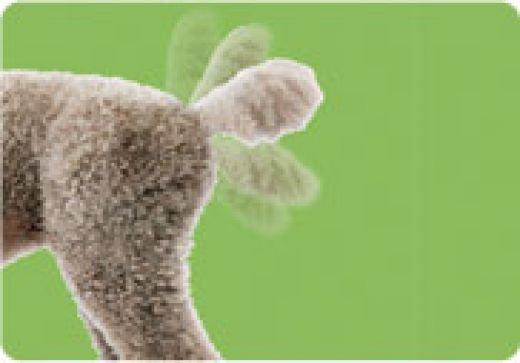
The movement of a dog’s tail is a dead giveaway to their mood, if you know how to read it.
A wagging tale = a happy dog, right? Usually, but not always!
First, check the height of the tail. An upright tail, if wagging steadily, indicates happiness or excitement. When the wagging slows down but stays upright, it takes on a more dominant tone, meaning "stay back" or "I'm in charge". A tail that is tucked close to the body indicates stress and unease. A relaxed tail at the middle height means the dog is content. These signs are harder to notice for dogs with docked tails, but you can still look at the base of the tail to give you some indication.


Content, happy tail
  • wagging back and forth excitedly
  • body posture is relaxed OR shaking with excitement
  • play bow + wagging tail
  • possible addition of ‘butt wiggles’
  • It’s hard to incorrectly identify a truly happy tail wag!

Unhappy tail
  • tucked between legs
  • limp or lifeless
  • clamped against legs to protect himself from a sniffing dog
    • - if your dog exhibits any of these signs he’s telling you he’s uncomfortable. Try to distract him from whatever is causing him distress. DO NOT bend down to comfort him as you would with a kid. Instead, try calling him using lots of excitement and energy and confidently lead him in a different direction. You want to distract him from the source of discomfort. By going down to his level to comfort him you are essentially rewarding him for showing fear.
(source)

When would you not approach a dog who is wagging his tail?
  • Ears are straight up and tensed
  • Neck is elongated and head is tall, giving off a confident appearance
  • Body posture is still
  • Tail is straight up and slowly wagging back and forth OR is completely stiff
  • The stiffer the tail is, the more caution you should take
    • This is a dog who is alert, on guard and could possibly attack. If you see this body language between 2 dogs, walk in between them and force them to walk away from each other. By making them move, you instantly decrease the tension and divert their attention. If you are approaching a dog who is giving you this type of body language, leave him alone, and wait for his body language to relax.


There is also new information that dogs use the direction of the tail wag to communicate as well! An article in the Washington Post describes a study where researchers hooked dogs up to heart rate monitors and had them watch videos of dogs wagging their tail to either the right or left side. Read the full article here!
Their results?
When watching a dog wag their tail to the right, they stayed calm and some even tried to approach the TV screen. But when they saw dogs wag their tail to the left, they got stressed out.
This is a little more work than I would like to do, but it can’t hurt to know!